Exposure drives selection
Washdown temperatures, cleaning chemicals and traffic guide the choice of resin, aggregate and surface texture.

Heavy-duty flooring
For facilities where heat, chemicals and heavy use meet.
Request a Quote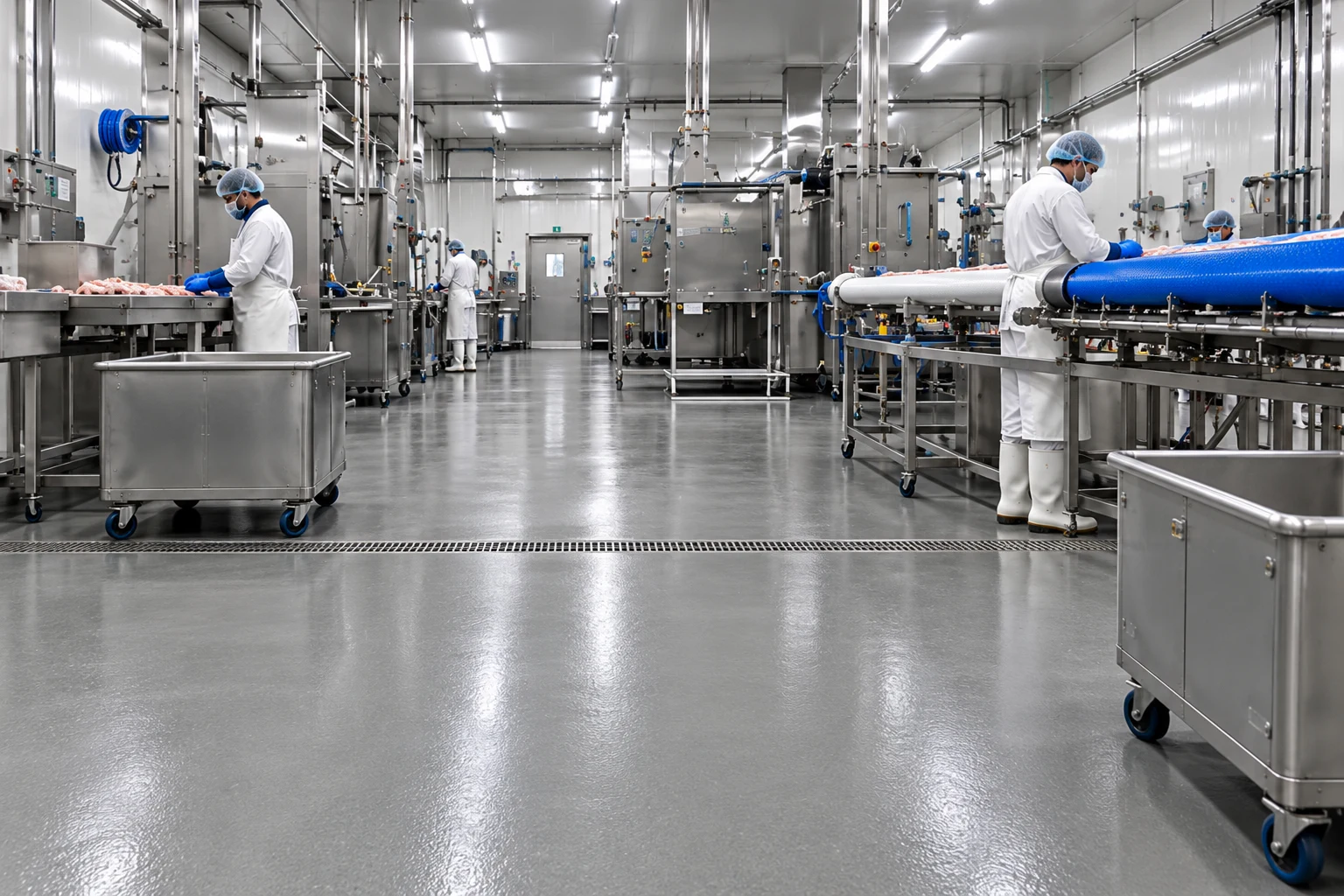
Washdown temperatures, cleaning chemicals and traffic guide the choice of resin, aggregate and surface texture.
For steam cleaning or sudden temperature changes, we check the product and installed thickness against your process.
We plan how the floor meets drains, walls and doorways, where edges need anchoring and how movement joints will work.
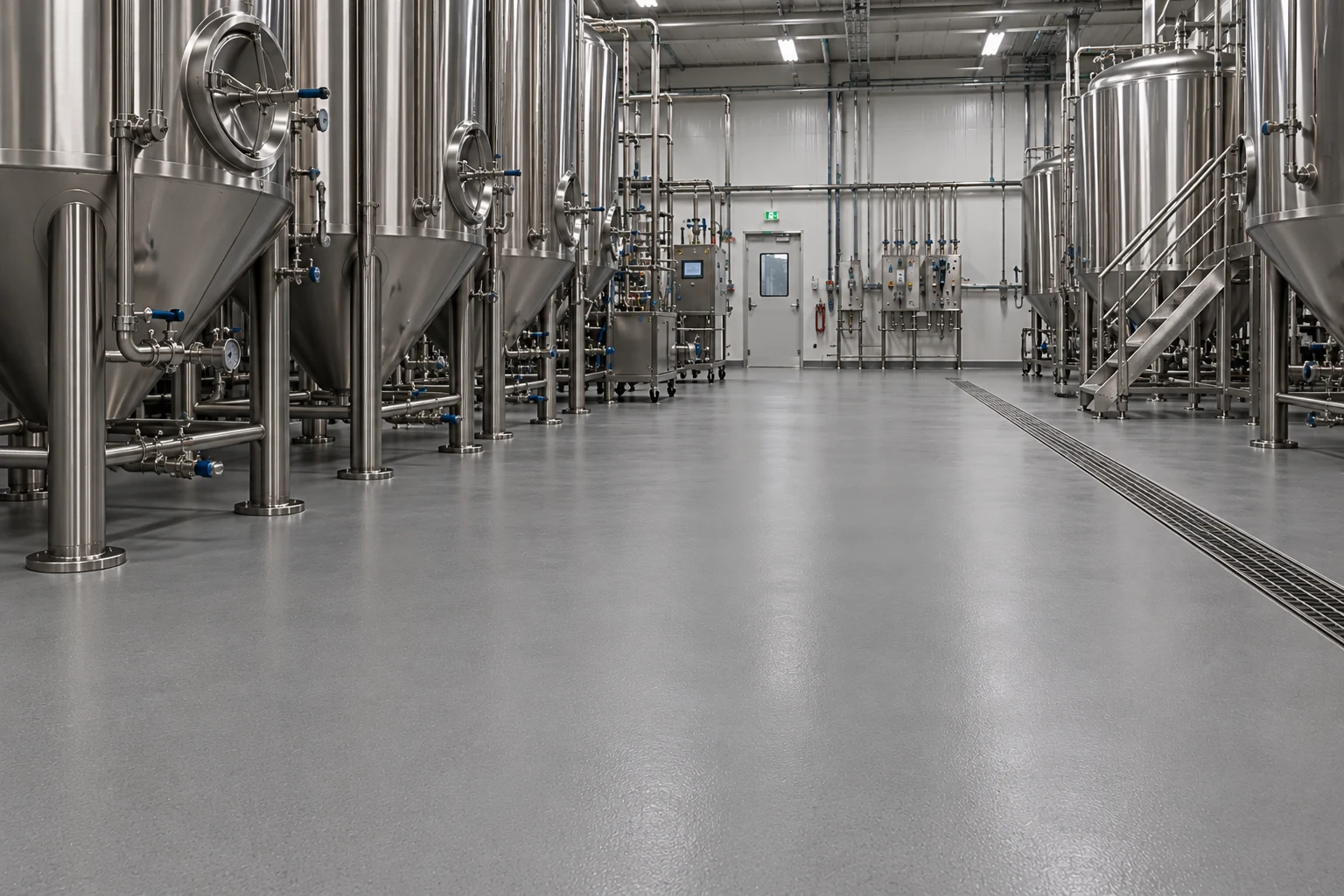
Urethane cement combines polyurethane resin, cement and aggregate. We can broadcast aggregate into the surface or trowel the mix into place, choosing a texture for the people, equipment and cleaning routines on your floor.
Food processing, commercial kitchens, breweries, dairies, beverage facilities, laboratories, cold storage and heavy-use manufacturing.
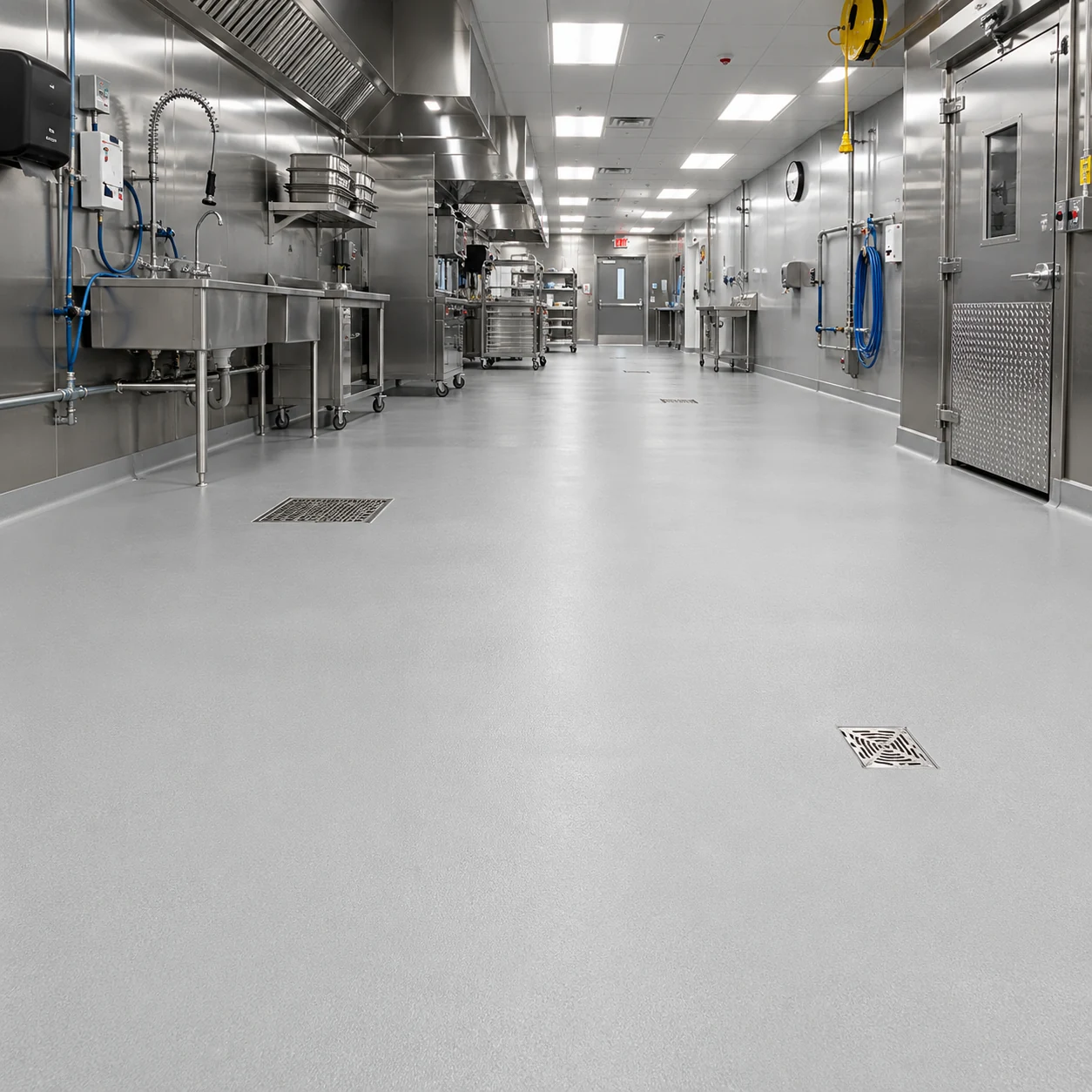
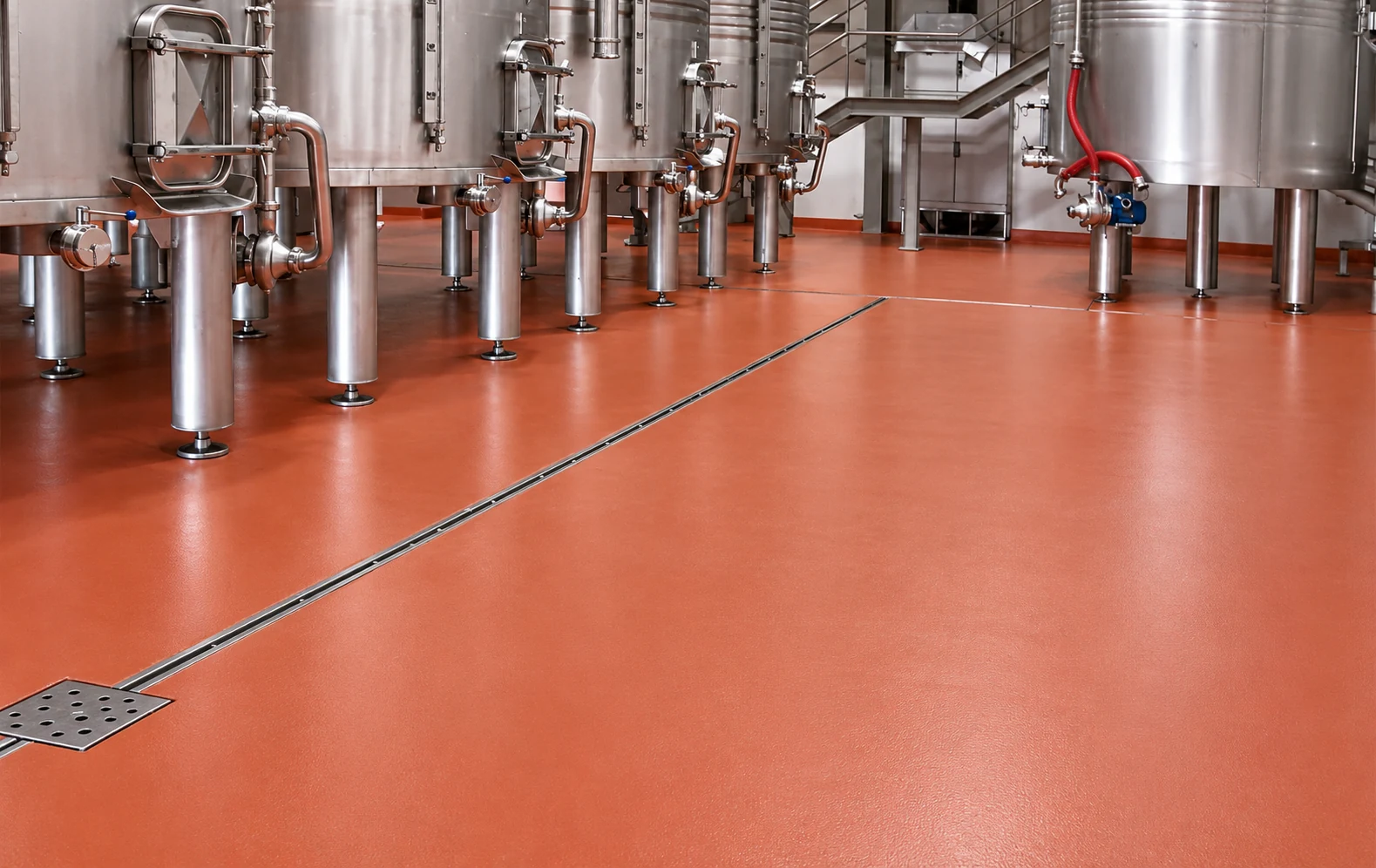
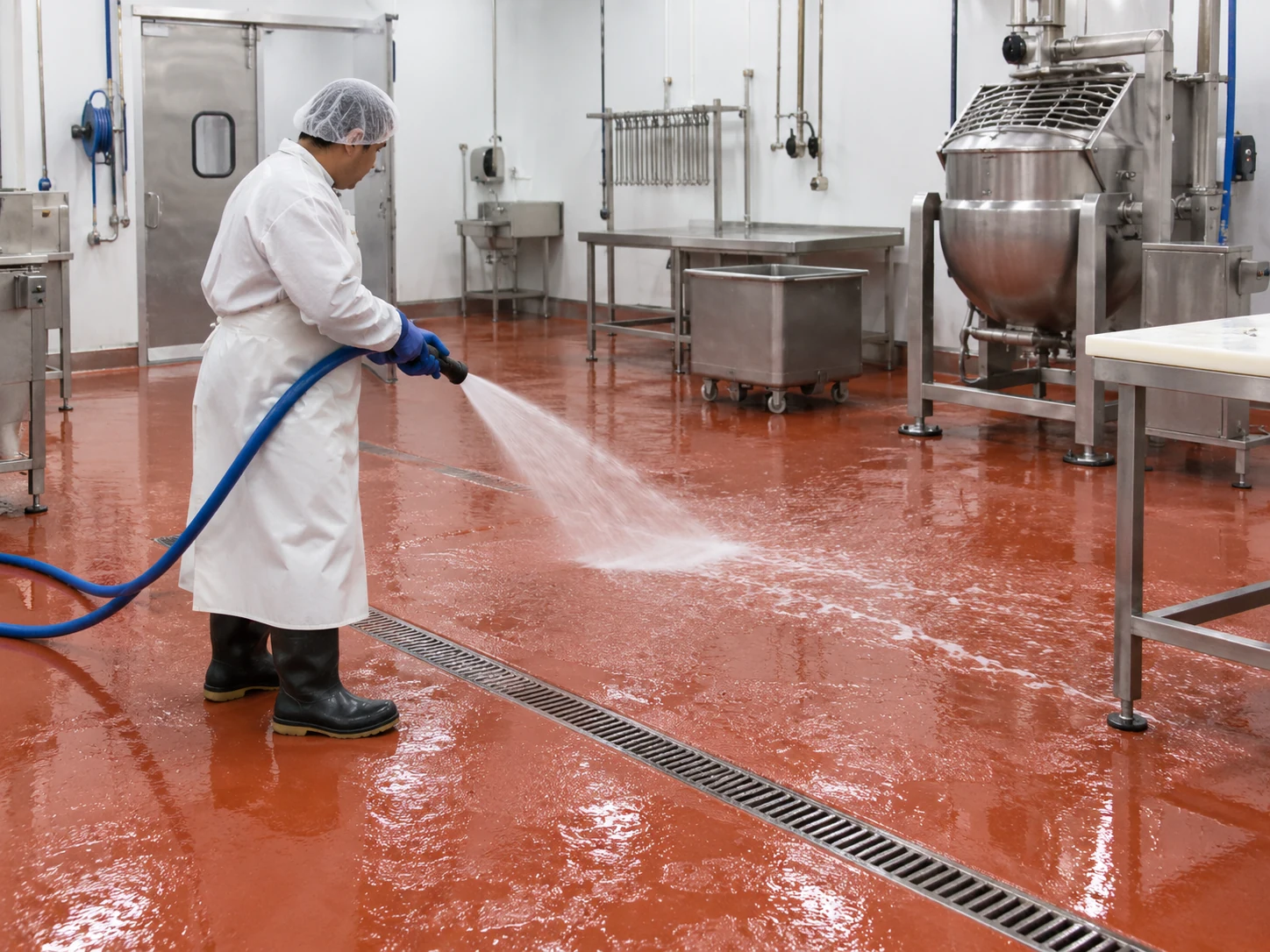
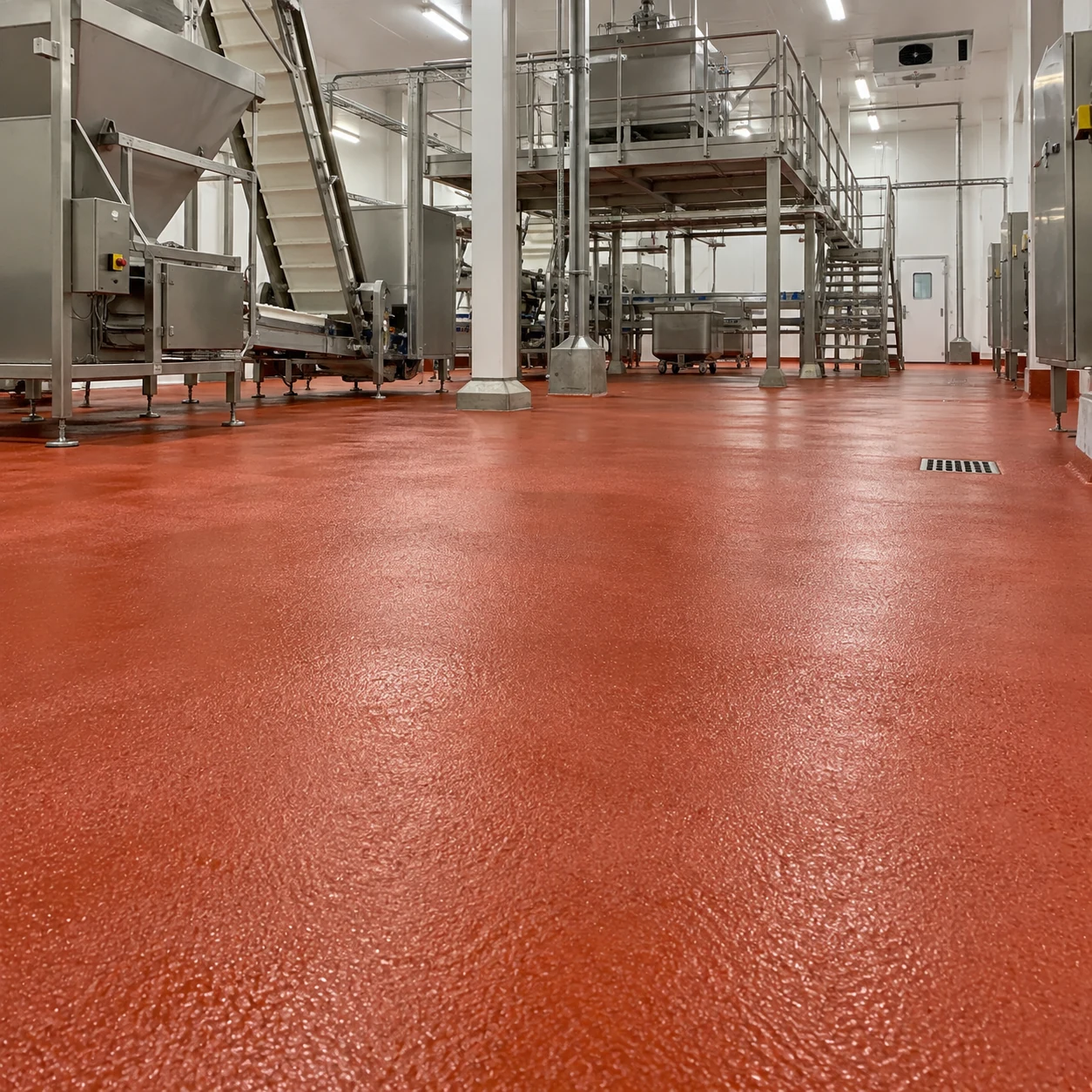
Drains, perimeter terminations, cove bases and transitions are part of the flooring design. Where required by the manufacturer, anchoring grooves help secure exposed edges against mechanical and thermal stresses. Existing movement joints must be properly accommodated rather than simply covered over.
Some urethane-cement products also tolerate higher substrate moisture than conventional coatings. That does not remove the need to assess the slab or investigate rising moisture and active water.
That depends on the product and installation conditions. Permission for foot traffic is not the same as readiness for hot washdowns, chemical exposure or full production. The return-to-service schedule should reflect the actual operation, not just the earliest walk-on time.