

Concrete protection
Waterproof Membrane Systems
Keep surface water from reaching the concrete and the rooms below.
Where a waterproof membrane helps
Water from a spill, a washdown or a vehicle can reach the space below through gaps in a concrete floor. A liquid-applied membrane provides a continuous barrier across the slab and ties into details such as drains, curbs and wall edges.
East Coast Coatings Inc. installs these systems in mechanical rooms, wash areas and parking structures across New Brunswick, Nova Scotia and Prince Edward Island.
Planning a project?
Tell us where the water comes from, what is beneath the floor and how people or vehicles use the space. A photo of the problem area or a drainage drawing is helpful.
Request a QuoteWhat each layer does
In a typical traffic-bearing system, each layer has a specific job. The exact assembly depends on the slab, the expected water exposure and the manufacturer’s specification.
- Primer
- Helps the membrane bond to the prepared concrete when the system calls for a primer.
- Membrane
- Forms the waterproof layer. Some membranes accommodate limited crack movement within their specified range.
- Wear layer and finish
- Protect the membrane from traffic. Aggregate in the wear layer helps provide the texture needed underfoot or under tires.
Match the wearing surface to the traffic
A car turning on a ramp puts more stress on the finish than one parked in a stall. Drive aisles and turning areas may need a heavier wear layer, even where the same waterproof membrane continues underneath.
In a mechanical room, we consider foot traffic, service carts, spills and cleaning. These details help us choose a finish that protects the membrane and can be maintained in everyday use.
Where the floor meets drains, walls and equipment
Water can bypass a membrane at an unfinished edge. The waterproofing detail needs to carry the barrier from the floor into the drain connection, up a curb or around a pipe penetration.
We assess cracks and movement joints separately. A joint designed to move needs a compatible joint detail that allows it to keep moving.
Where is the moisture coming from?
A floor that gets wet during cleaning presents a different problem from a slab that stays damp when the room is dry. A surface membrane deals with water arriving from above. Moisture rising through the slab can affect how well the system bonds.
What we look for
We ask when the dampness appears and whether it follows rain, washdowns or equipment use. If the slab itself is a source of moisture, its condition needs to be assessed before specifying a primer, membrane or separate moisture-control treatment.
Project gallery
Select a photo to see the installation in more detail.
The waterproof layer
The membrane forms the water barrier. In areas with foot or vehicle traffic, wear layers protect it from abrasion.
Edges and drains
The barrier needs to continue wherever the floor meets a wall, drain or pipe. Each connection needs its own detail.
Moisture in the slab
If the concrete stays damp between spills or washdowns, we assess the source before choosing a system.
Bathurst, New Brunswick
Waterproofing hospital mechanical rooms
These three photographs follow our installation from the bare concrete to the finished grey floor.
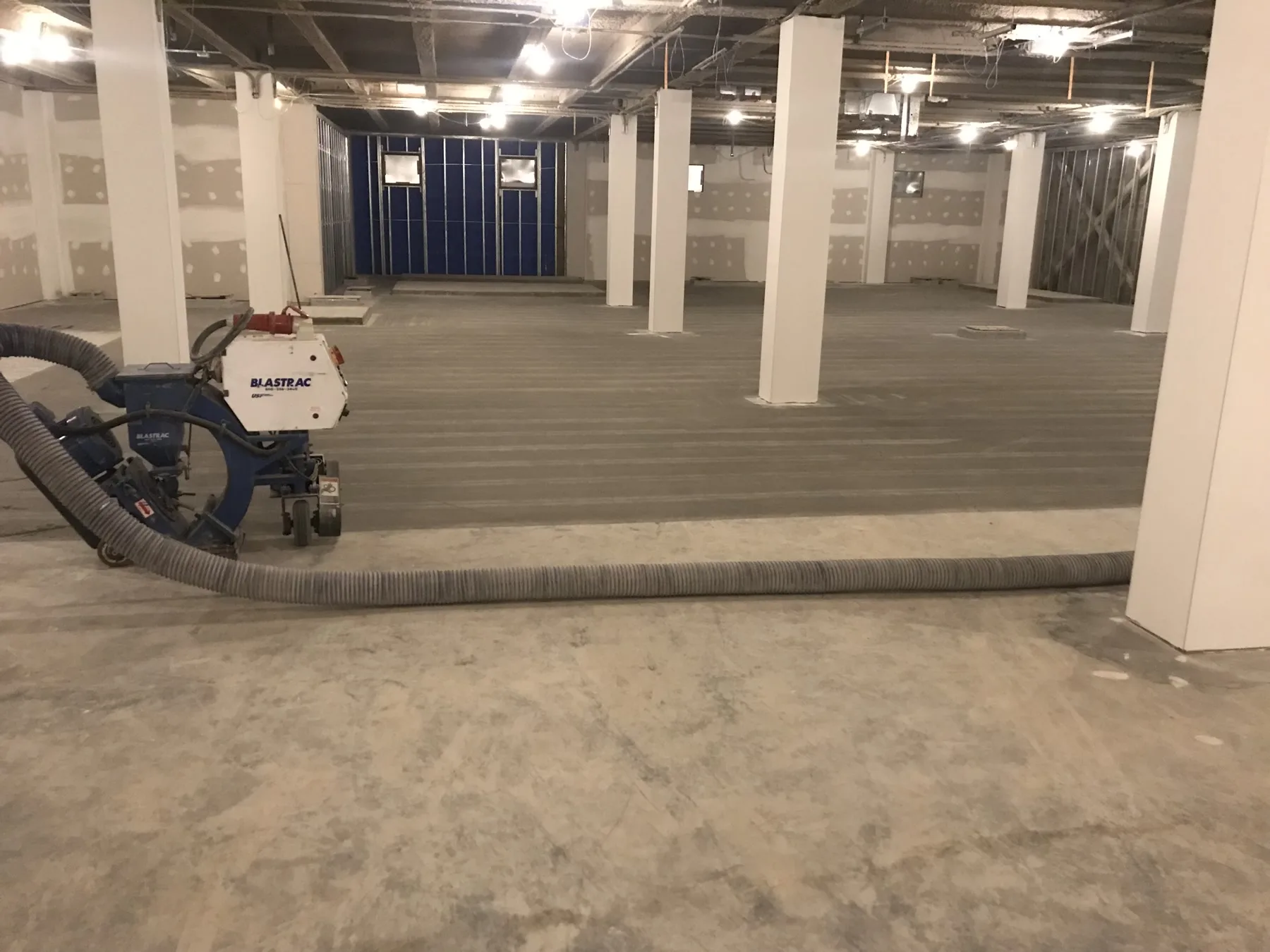
Prepare the concrete
We shot-blasted the concrete between the columns to prepare the slab for the membrane.
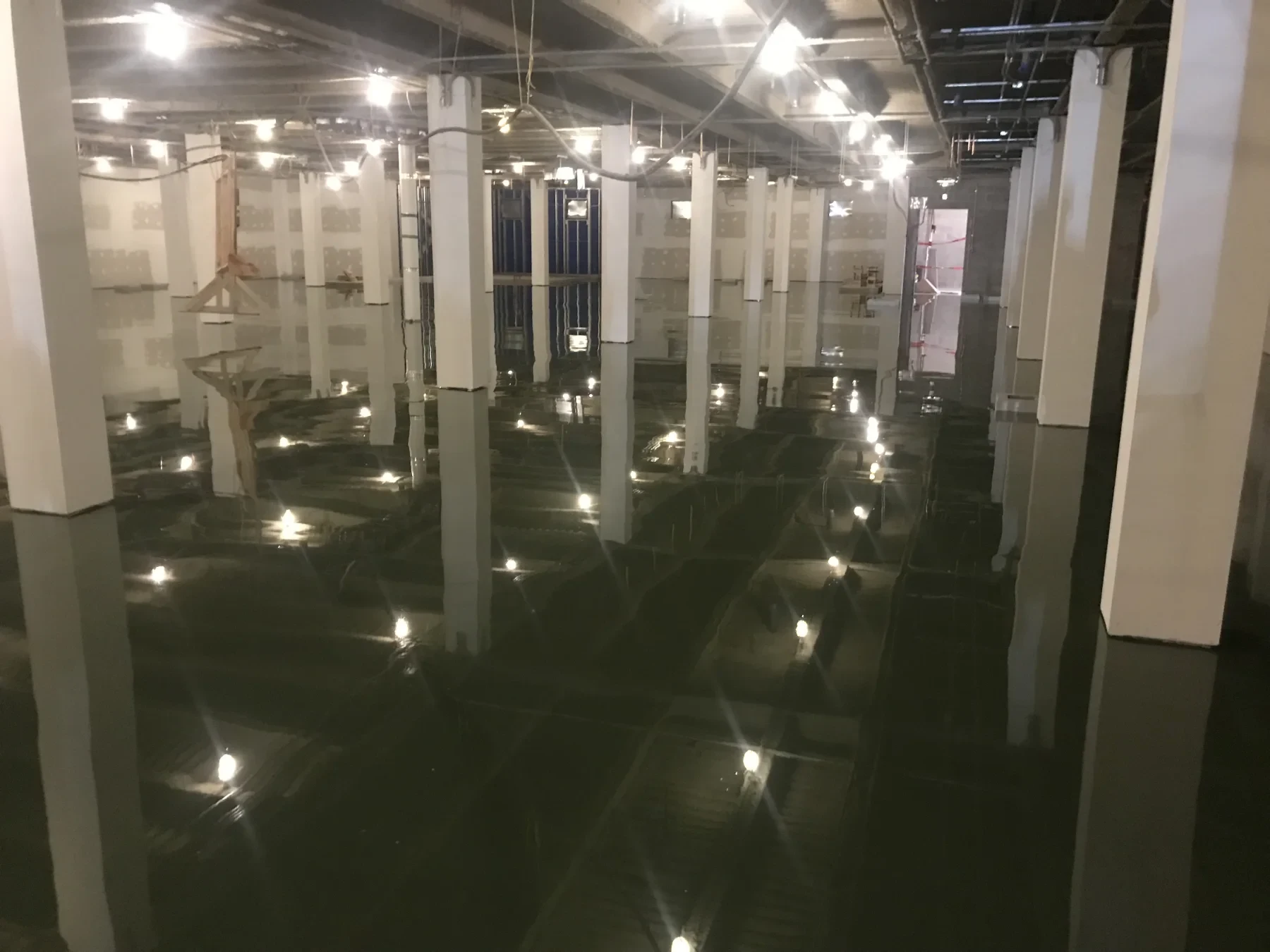
Apply the membrane
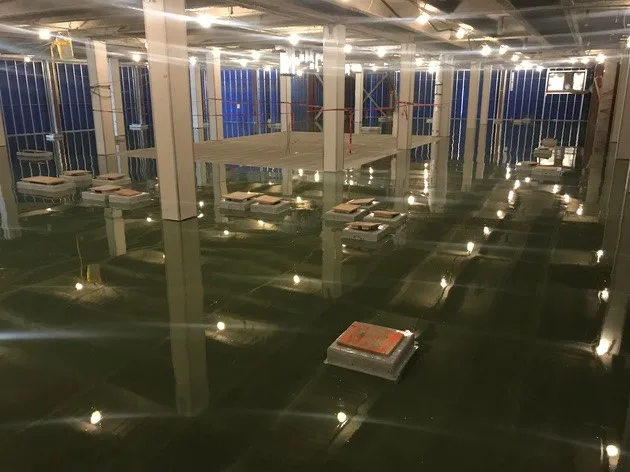
The dark waterproofing membrane is visible across the floor before the finish goes on.
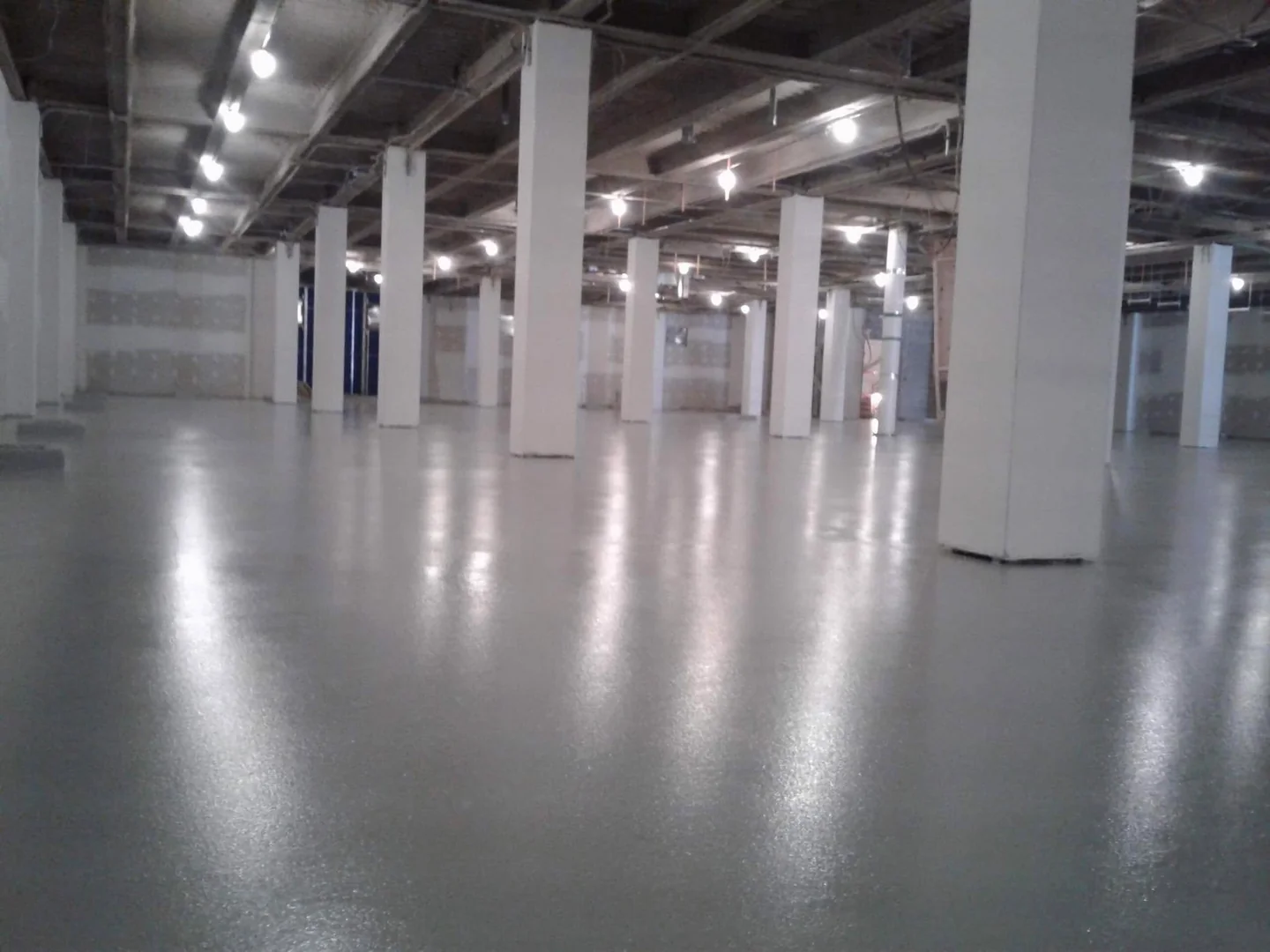
Finish the floor
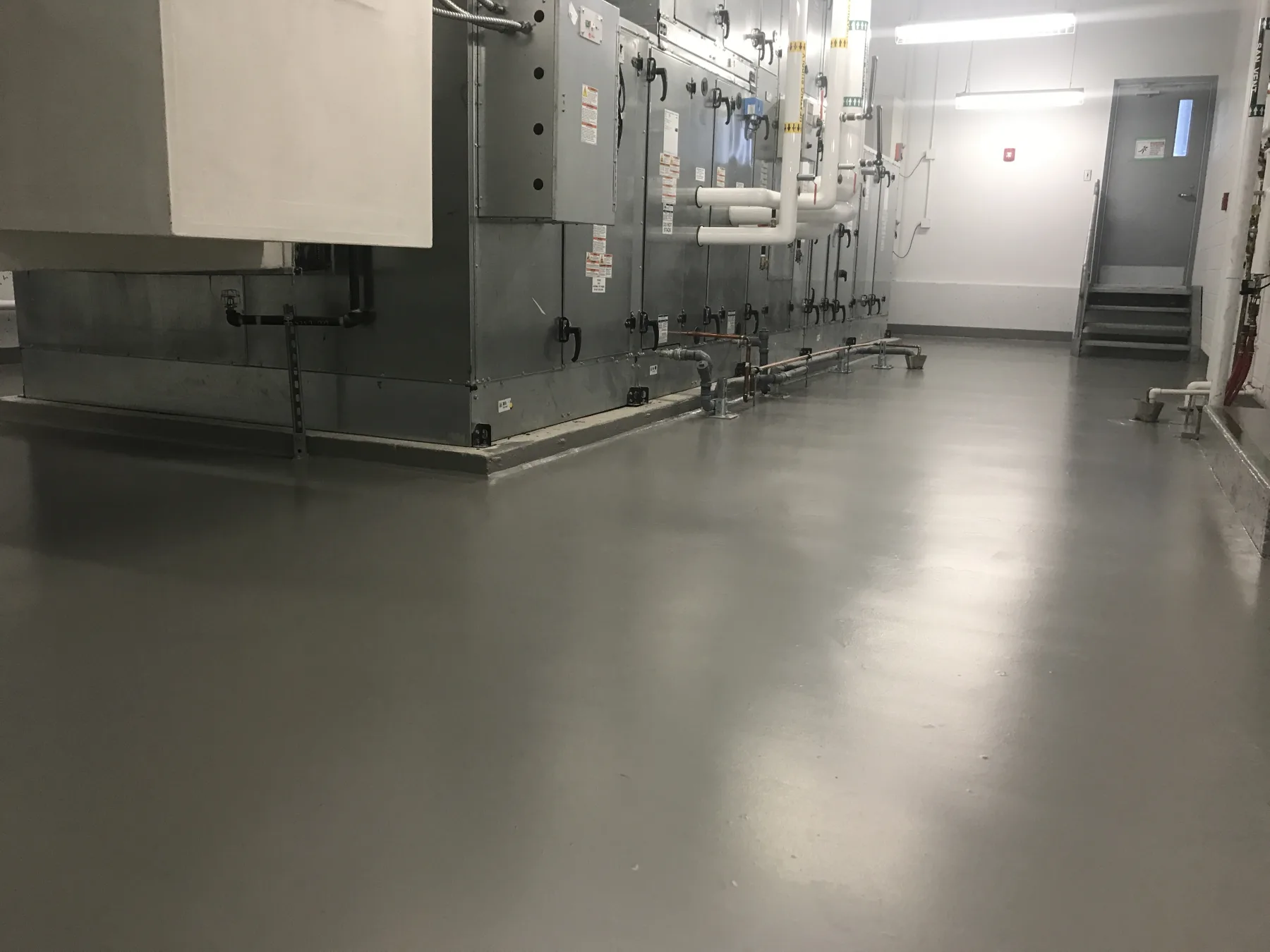
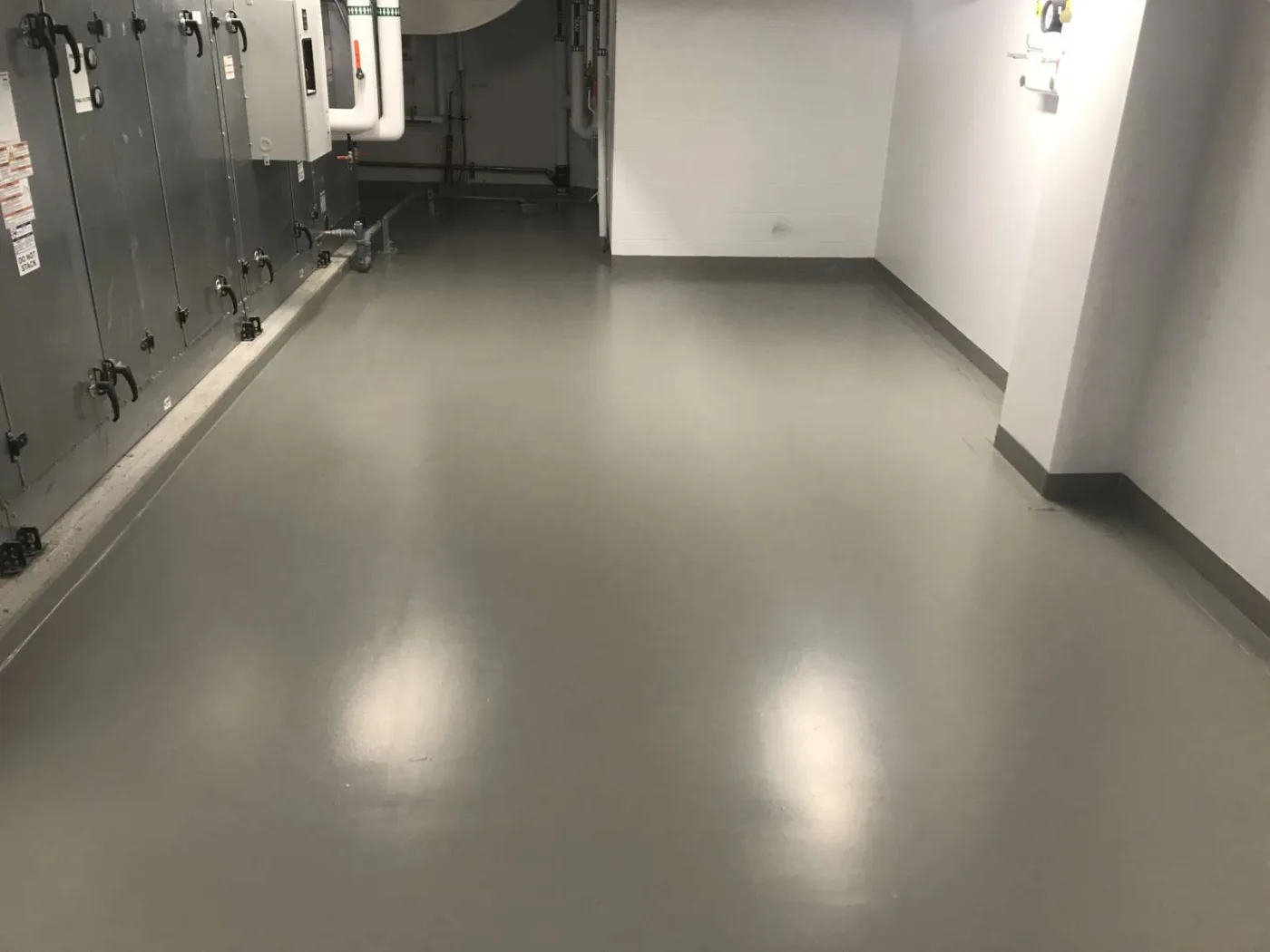
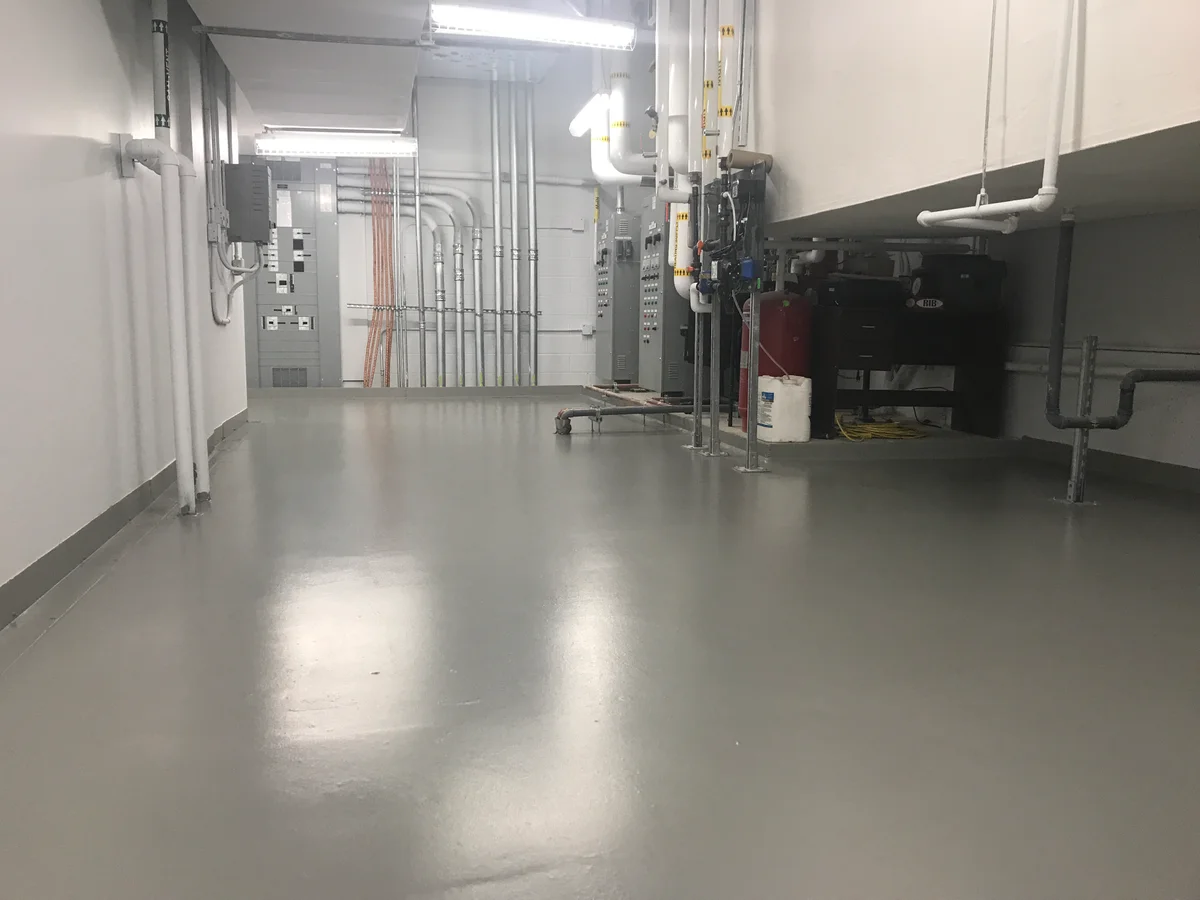
The completed floor has a uniform grey finish over the waterproofing membrane.